
Rigid Plastic And Film Recycling Line
Rigid Plastic And Film Recycling Line
The process begins with reducing the size of plastic waste using a shredder or crushing machine.
- Material Compatibility:
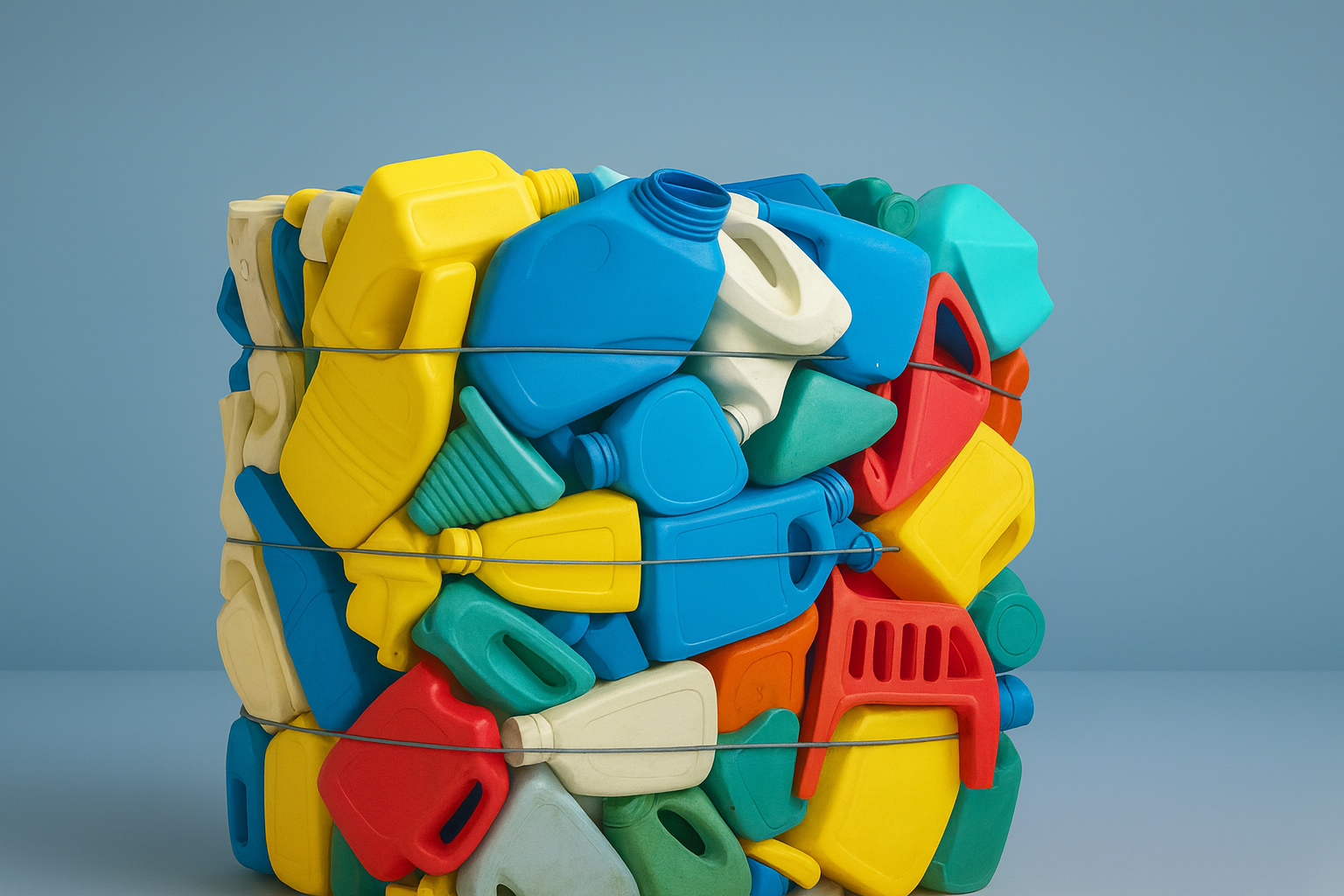
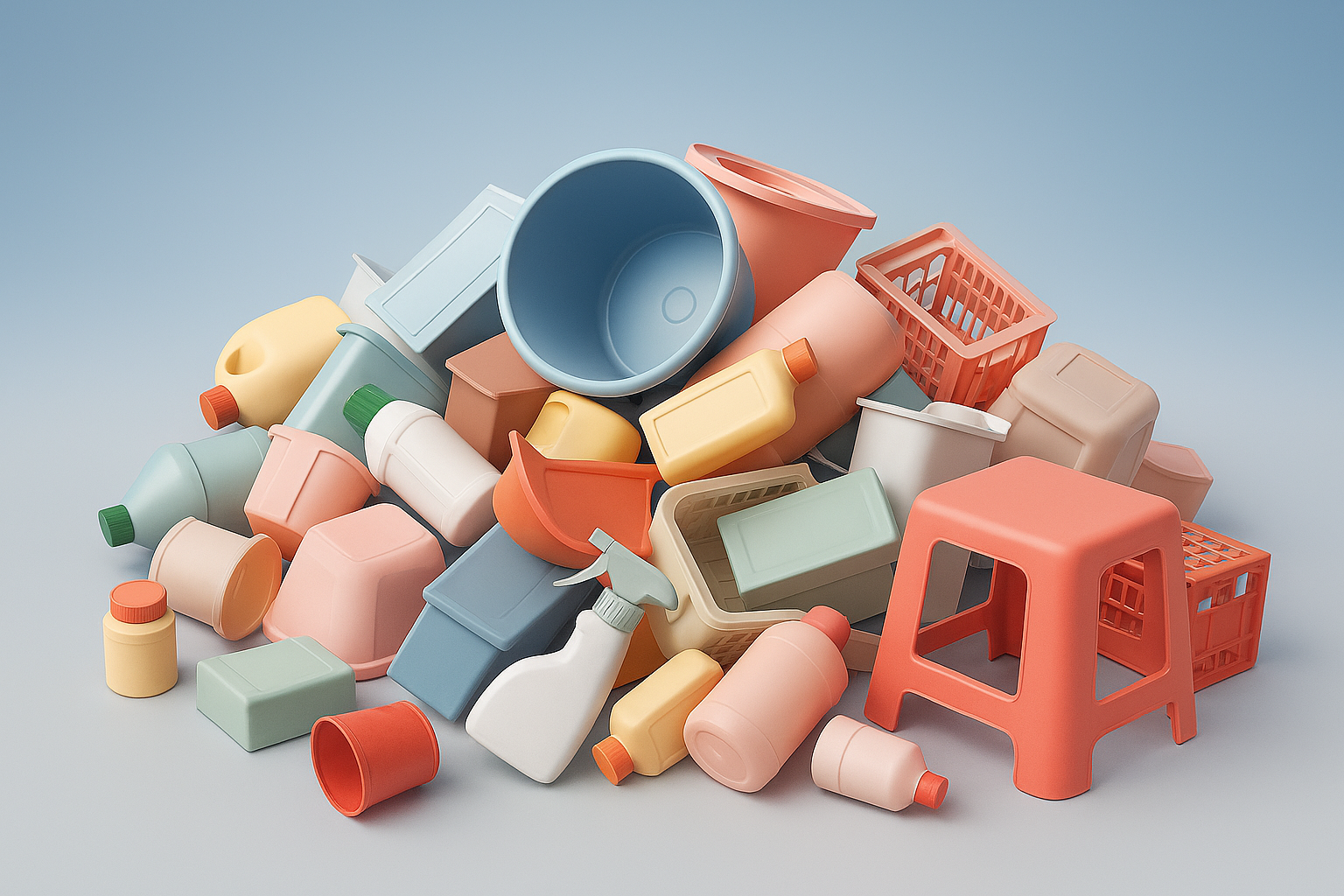
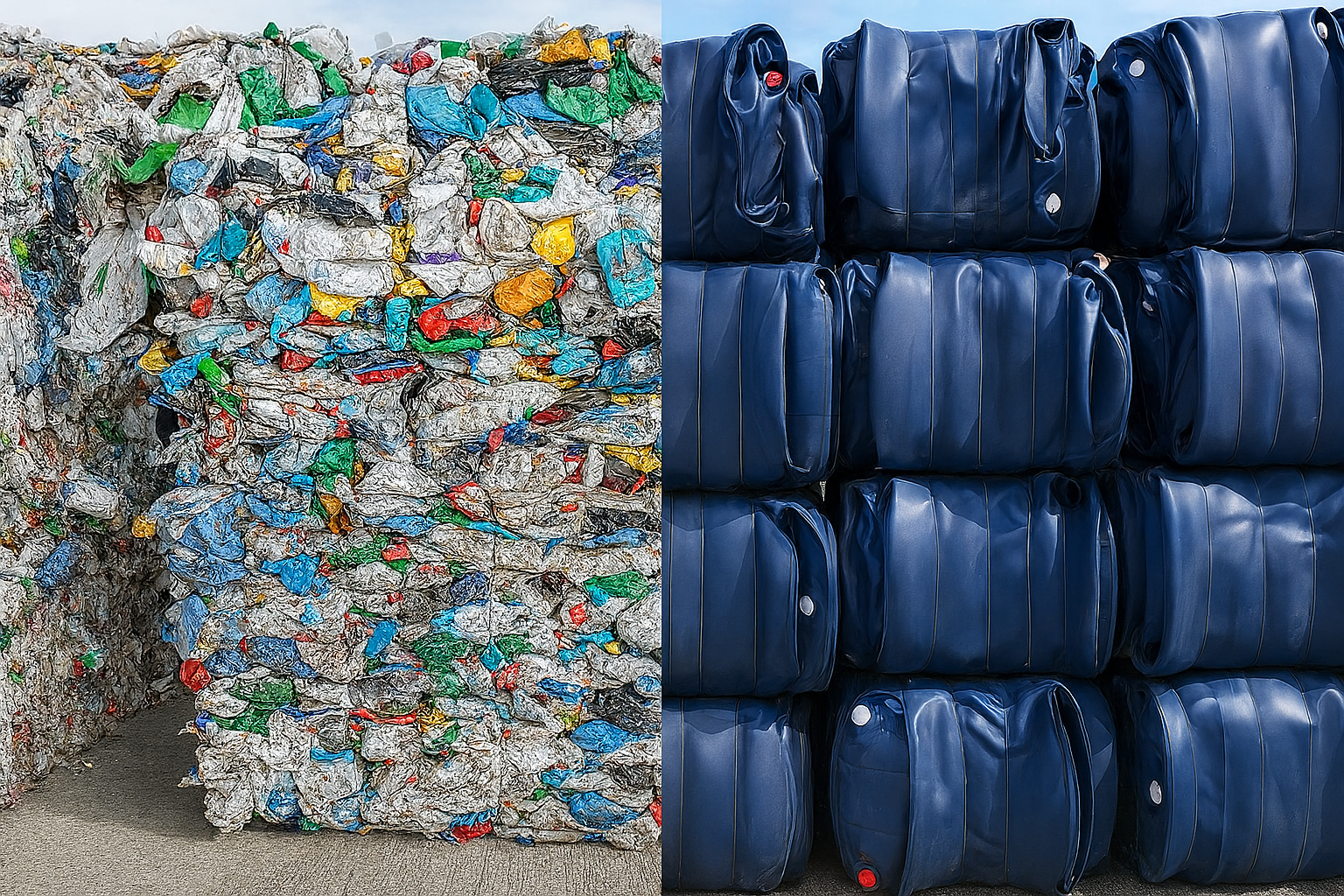
- Suitable for LLDPE, LDPE, HDPE and PP film, bottles, drums, cases and rigid plastics
- Feeding System:
- Automatic loading system with conveyor belt or hydraulic feed
- Crusher/Shredder Unit:
- High torque rotor, wear-resistant blades, replaceable screen system
- Washing System:
- Cold wash + hot wash (optional), friction washer
- Density Separation (Float-Sink Tank):
- Water-based flotation-sedimentation system for PE and PP separation
- Drying Unit:
- Mechanical centrifuge + hot air drying system
- Final moisture content: 1–2%
- Capacity Range:
- Average 300 kg – 2000 kg per hour (depending on line configuration)
- Energy Consumption:
- Low kWh/kg consumption with optimized motors
- Automation System:
- PLC controlled fully automatic Operation
- Touch HMI panel
- Electrical Infrastructure:
- 380V / 50Hz industrial electrical system
- Filtration & Water Recovery:
- Closed-loop water handling, sediment and waste filtration system
- Noise and Safety:
- Protective covers compliant with CE standards
- Emergency stop and sensor-based safety systems
- Output Product:
- Clean, homogeneous and granulation-ready plastic flakes
In the plastics recycling sector, the most commonly processed materials include Polyethylene (LLDPE, LDPE, HDPE) and Polypropylene (PP). Waste of these polymers, both in hard granule and film form, can be efficiently reprocessed using specially designed recycling lines.
How Does the Recycling Process Work?
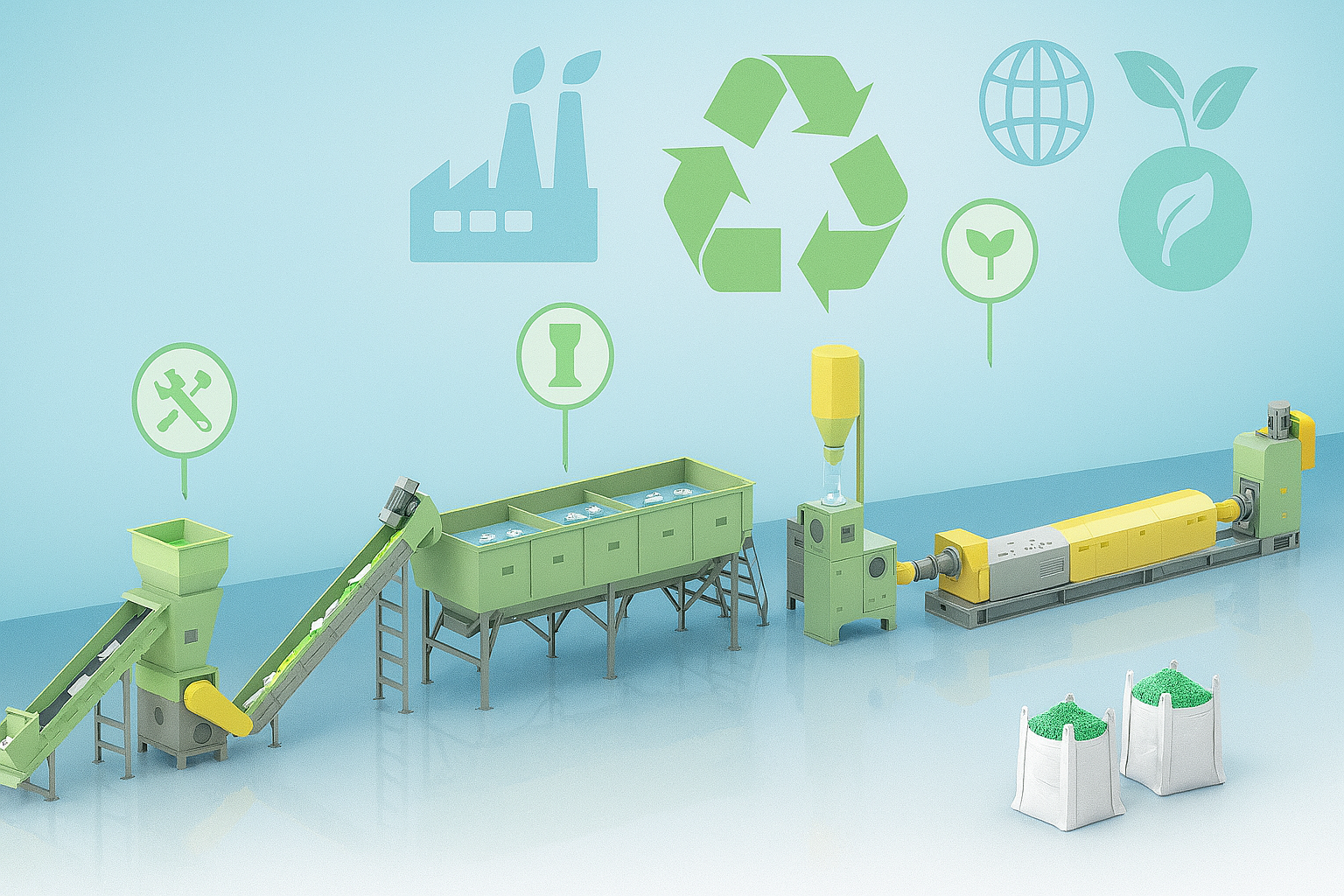
The process begins with reducing the size of plastic waste using a shredder or crushing machine. This process prepares the material for the washing line. The shredded plastics are directed to a fully automated washing line using appropriate conveying systems.
In the washing line, dirt, oil, and other contaminants on the surface are removed using high-speed centrifuges and integrated friction systems. In the next stage, the plastics are separated from heavier plastics and inorganic pollutants in washing tanks that operate based on density differences. The cleaned plastics are then transferred either directly to a compact extruder system or to an agromel + extruder combination to become recyclable. In these machines, plastic waste is reprocessed and transformed into high-quality raw materials in granular form. Line Design and Project Planning
Each recycling line is specifically designed according to criteria such as:
Contamination level
Form (film/rigid)
Daily capacity
End of use
of the material to be processed. This ensures maximum optimization in both efficiency and energy costs.