
Storage Silo
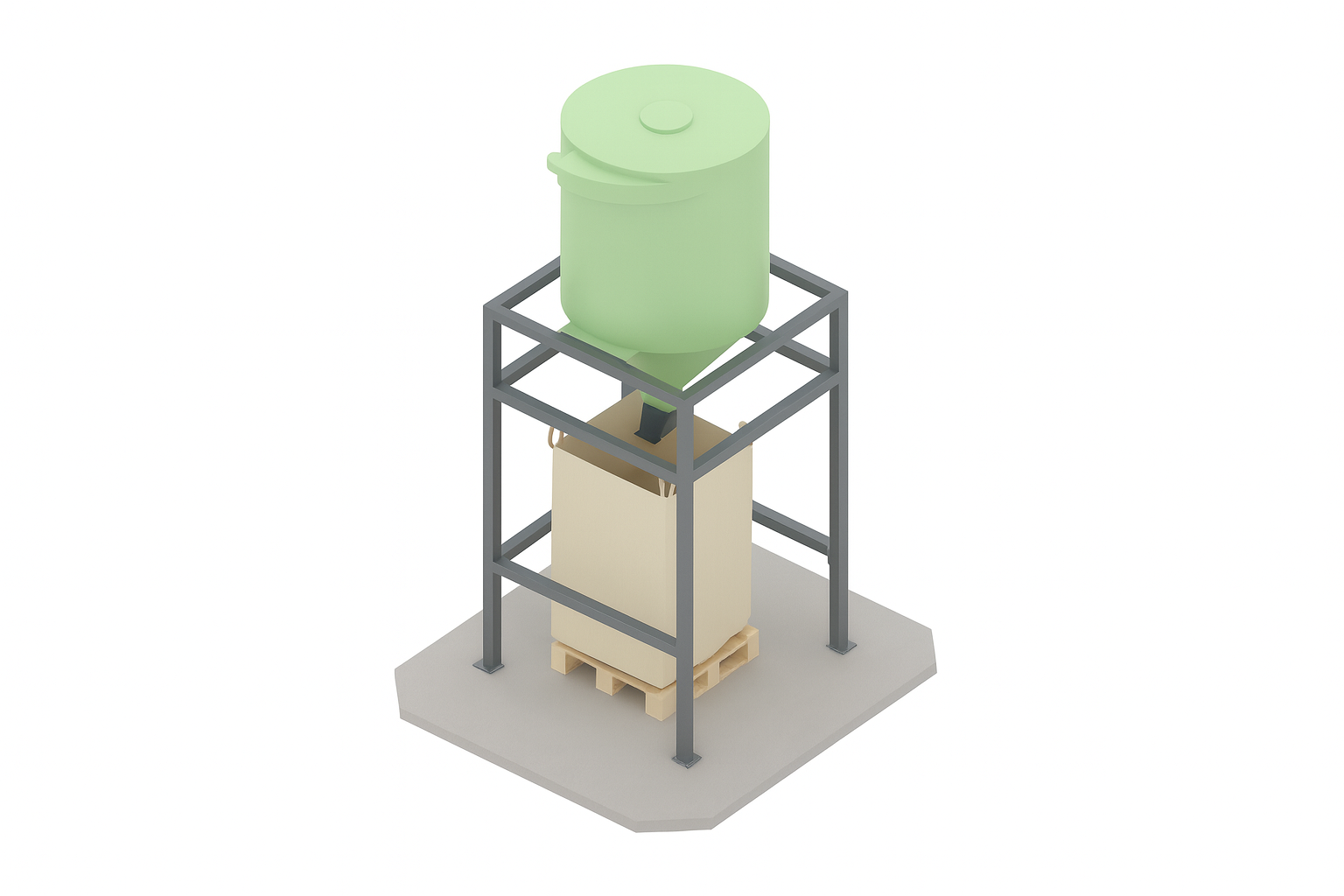
Storage Silo
Air-assisted transfer method allows for rapid, clean, and continuous material analysis without causing deformation or contamination of the granules.
- Pneumatic Conveying Fan System: Transfers plastic granules efficiently from the cutting unit to the storage silo with continuous airflow, ensuring fast and clean material handling.
- Standard 3 m³ Storage Capacity: Designed to provide optimal temporary storage while maintaining a compact footprint within the production line.
- Material Options (DKP / AISI 304): Silo body can be manufactured from DKP sheet steel for standard applications or AISI 304 stainless steel for corrosion-resistant and hygienic environments.
- Optimized Discharge Design: Conical bottom structure enables smooth and complete material discharge, preventing bridging and material buildup inside the silo.
- Seamless Line Integration: Fully compatible with granule cutting, conveying, and downstream packaging systems, supporting uninterrupted and efficient production flow.
Granule cutting machines convert processed plastic materials into uniform granule form, which is then pneumatically transferred to the storage silo via a high-efficiency conveying fan system. This air-assisted transfer method ensures fast, clean, and continuous material flow without causing deformation or contamination of the granules.
Granule storage silos are manufactured with a standard capacity of 3 m³, providing an organized and space-efficient solution for temporary material storage. Depending on operational requirements and material characteristics, the silo body can be produced from DKP sheet steel for standard industrial use or AISI 304 stainless steel for applications requiring higher corrosion resistance and hygienic conditions.
Designed for seamless integration with granulation and conveying systems, storage silos support stable production cycles by preventing material accumulation and downtime. Their robust structure, optimized discharge geometry, and optional level monitoring features enhance process control, improve workplace safety, and contribute to the overall efficiency of plastic recycling and compounding lines.